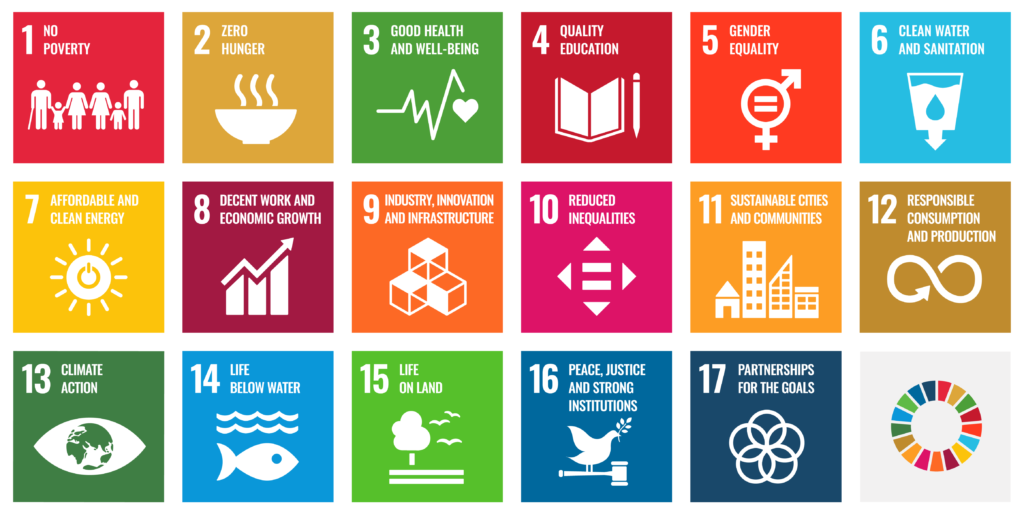
17 Goals for People, for Planet
Today, progress is being made in many places, but, overall, action to meet the Goals is not yet advancing at the speed or scale required. 2020 needs to usher in a decade of ambitious action to deliver the Goals by 2030.
UN SDGs
The Millennium Development Goals (MDGs) were implemented from 2000 to 2015. The 17 SDGs is to be implemented from 2016 to 2030 as the new initiative of the UN and the biggest joint objective of the international community
The goals include a wide arrange of social problems (poverty, diseases, education, women, children, refugees, disputes etc.), environmental problems and climate change (climate change, energy, environmental pollution, water, biodiversity etc.), economic problems (technology, housing, working conditions, labor, employment, production and consumption, social structures, laws, infrastructure construction, domestic and international economy). The SDGs is the biggest joint objective for the international community which aims to resolve such issues through the implementation of 17 goals and following 169 specific goals until 2030.
GOAL.1
GOAL.2
End hunger, achieve food security and improved nutrition, and promote sustainable agriculture
GOAL.3
Ensure healthy lives and promote well-being for all at all ages
GOAL.4
Ensure inclusive and equitable quality education and promote life-long learning opportunities for all
GOAL.5
Achieve gender equality and empower all women and girls
GOAL.6
Ensure availability and sustainable management of water sanitation for all
GOAL.7
Ensure access to affordable, reliable, sustainable, and modern energy for all
GOAL.8
Promote sustained, inclusive, and sustainable economic growth, full and productive employment, and decent work for all
GOAL.9
Build resilient infrastructure, promote inclusive and sustainable industrialization and foster innovation
GOAL.10
Reduce inequality within and among countries
GOAL.11
Make cities and human settlements inclusive, safe, resilient and sustainable
GOAL.12
Ensure sustainable consumption and production patterns
GOAL.13
Take urgent action to combat climate change and its impacts
GOAL.14
Conserve and sustainably use the oceans, seas and marine resources for sustainable development
GOAL.15
Protect, restore and promote sustainable use of terrestrial ecosystems, sustainably manage forests, combat desertification, and halt and reverse land degradation and halt biodiversity loss
GOAL.16
Promote peaceful and inclusive societies for sustainable development, provide access to justice for all and build effective, accountable and inclusive institutions at all levels.
GOAL.17
Strengthen the means of implementation and revitalize the global partnership for sustainable development
UN SDGs
The Millennium Development Goals (MDGs) were implemented from 2000 to 2015. The 17 SDGs is to be implemented from 2016 to 2030 as the new initiative of the UN and the biggest joint objective of the international community
The goals include a wide arrange of social problems (poverty, diseases, education, women, children, refugees, disputes etc.), environmental problems and climate change (climate change, energy, environmental pollution, water, biodiversity etc.), economic problems (technology, housing, working conditions, labor, employment, production and consumption, social structures, laws, infrastructure construction, domestic and international economy). The SDGs is the biggest joint objective for the international community which aims to resolve such issues through the implementation of 17 goals and following 169 specific goals until 2030.
GOAL.1
GOAL.2
End hunger, achieve food security and improved nutrition, and promote sustainable agriculture
GOAL.3
Ensure healthy lives and promote well-being for all at all ages
GOAL.4
Ensure inclusive and equitable quality education and promote life-long learning opportunities for all
GOAL.5
Achieve gender equality and empower all women and girls
GOAL.6
Ensure availability and sustainable management of water sanitation for all
GOAL.7
Ensure access to affordable, reliable, sustainable, and modern energy for all
GOAL.8
Promote sustained, inclusive, and sustainable economic growth, full and productive employment, and decent work for all
GOAL.9
Build resilient infrastructure, promote inclusive and sustainable industrialization and foster innovation
GOAL.10
Reduce inequality within and among countries
GOAL.11
Make cities and human settlements inclusive, safe, resilient and sustainable
GOAL.12
Ensure sustainable consumption and production patterns
GOAL.13
Take urgent action to combat climate change and its impacts
GOAL.14
Conserve and sustainably use the oceans, seas and marine resources for sustainable development
GOAL.15
Protect, restore and promote sustainable use of terrestrial ecosystems, sustainably manage forests, combat desertification, and halt and reverse land degradation and halt biodiversity loss
GOAL.16
Promote peaceful and inclusive societies for sustainable development, provide access to justice for all and build effective, accountable and inclusive institutions at all levels.
GOAL.17
Strengthen the means of implementation and revitalize the global partnership for sustainable development
Our Contribution to the Sustainable Development Goals (SDGs)
With our commitment we are making a contribution to the “The 2030 Agenda for Sustainable Development”,adopted by all United Nations Member States in 2015. At its heart are the 17 Sustainable Development Goals (SDGs).
We are making contributions to the SDGs “Climate Action” (Goal 13), “Life Below Water” (Goal 14) and “Life On Land” (Goal 15)
Environmental Management Policy for Sustainability
1.
2.
3.
4.
5.
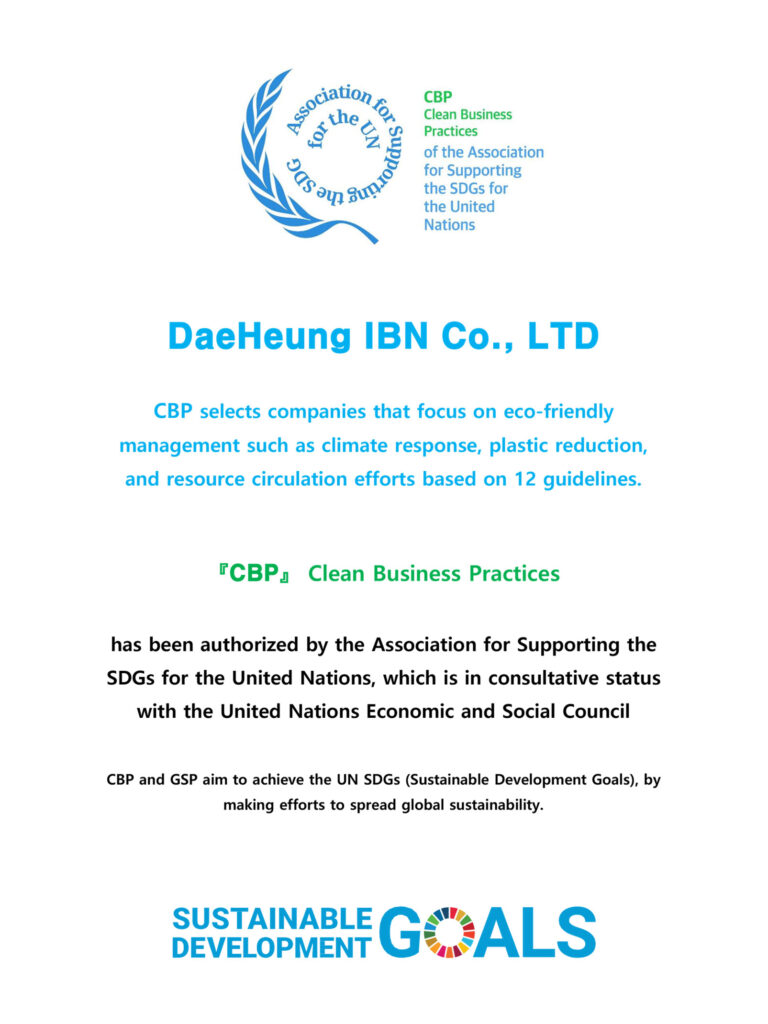
CBP Certification(Clean Business Practices)
CBP selects companies that focus on eco-friendly management such as climate response, plastic reduction, and resource circulation efforts based on 12 guidelines.
『CBP』 Clean Business Practices has been authorized by the Association for Supporting the SDGs for the United Nations, which is in consultative status with the United Nations Economic and Social Council
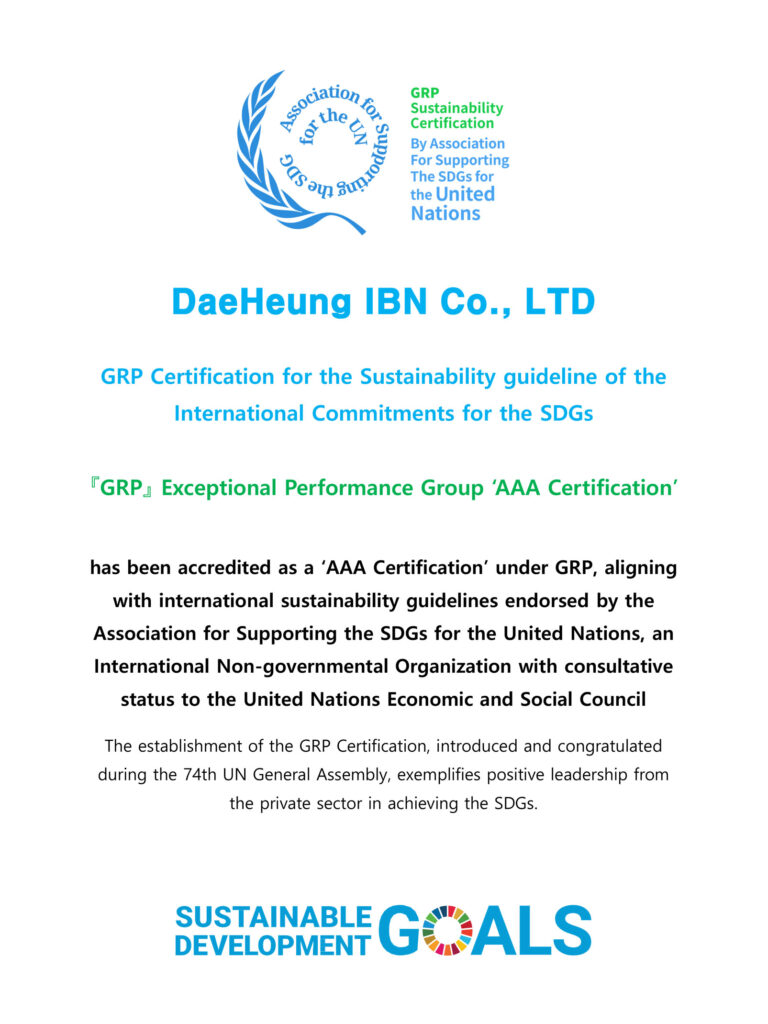
GSP Certification(Good Sustainability Practices)
GSP selects companies with Sustainable ESG Management System based on 21 guidelines.
『GSP』 Good Sustainability Practices has been authorized by the Association for Supporting the SDGs for the United Nations, which is in consultative status with the United Nations Economic and Social Council
CBP and GSP aim to achieve the UN SDGs (Sustainable Development Goals),by making efforts to spread global sustainability